

What Pants Should You Wear After Knee Surgery?
Published
In this guide

Start with the pants you already have
Before you buy anything, put your existing trousers through a short check.
- Getting in: can the pant leg pass comfortably over your foot, ankle and knee without dragging against a dressing or brace, if you have one?
- Seated space: when you sit, is there still room around the knee, or does the fabric pull tight and press on a tender area?
- Exposure: when the knee needs to be checked or treated, can you move or roll up the fabric far enough to show the required area without uncomfortable pressure or tugging?
- Closing up: can you put the clothing back in place and fasten it afterward, with help if needed?
Only think about dressings, braces or prescribed under-layers if you actually have them. Keep every movement within what your own medical and physiotherapy team has said is allowed — this is about choosing clothes, not designing exercises. In a knee-replacement setting, occupational therapy advice from Cambridge University Hospitals also suggests bringing your own loose-fitting clothes to the ward and practicing dressing after the operation.
Three ways to cover and expose the knee
| Option | When it works well | What to still check |
|---|---|---|
| Loose, full-length trousers | The pant leg goes on easily and the waist fastens without strain, with room when you sit; if the knee needs checking, the fabric can move aside to show the area without pulling. | The knee still needs room when you sit, and the fabric must not pull on a sore area. |
| Shorts, capris or a skort | The actual hem length and how far the fabric moves suit your needs, and you are comfortable with that level of coverage. | Whether the length actually leaves the needed area uncovered — shorts usually do, while a capri or a skort (a skirt with built-in shorts) may or may not, depending on length, how the fabric moves and how much coverage you want. |
| Side-opening pants | You want to open a section to dress, expose or re-cover the knee. | Whether you can reach, line up and close the fastening — or have help arranged if you cannot — and how the closed pants sit. |
In its hospital packing list for knee surgery, Oberschwabenklinik lists tracksuit pants with wide leg openings or shorts.
Closing up again after physio or an appointment
Opening a pair of pants is only half the job. You may arrive at physiotherapy with the knee covered, open a section so the therapist can work, and then want that same section closed again before you leave. When it is time to close up, check the position you are in: can you reach the opened fastening while seated, line the two sides up, and do it up? If not, plan who can help before you need it.
This article compares two side-opening closures. Full side-snap recovery pants open from waist to hem with plastic press studs; each stud has to be lined up and pressed shut, and doing this one-handed can be tiring. Full side-opening Velcro recovery pants open the whole side with hook-and-loop strips and close by lining up and pressing the strips back together. Both open only as far as you need.
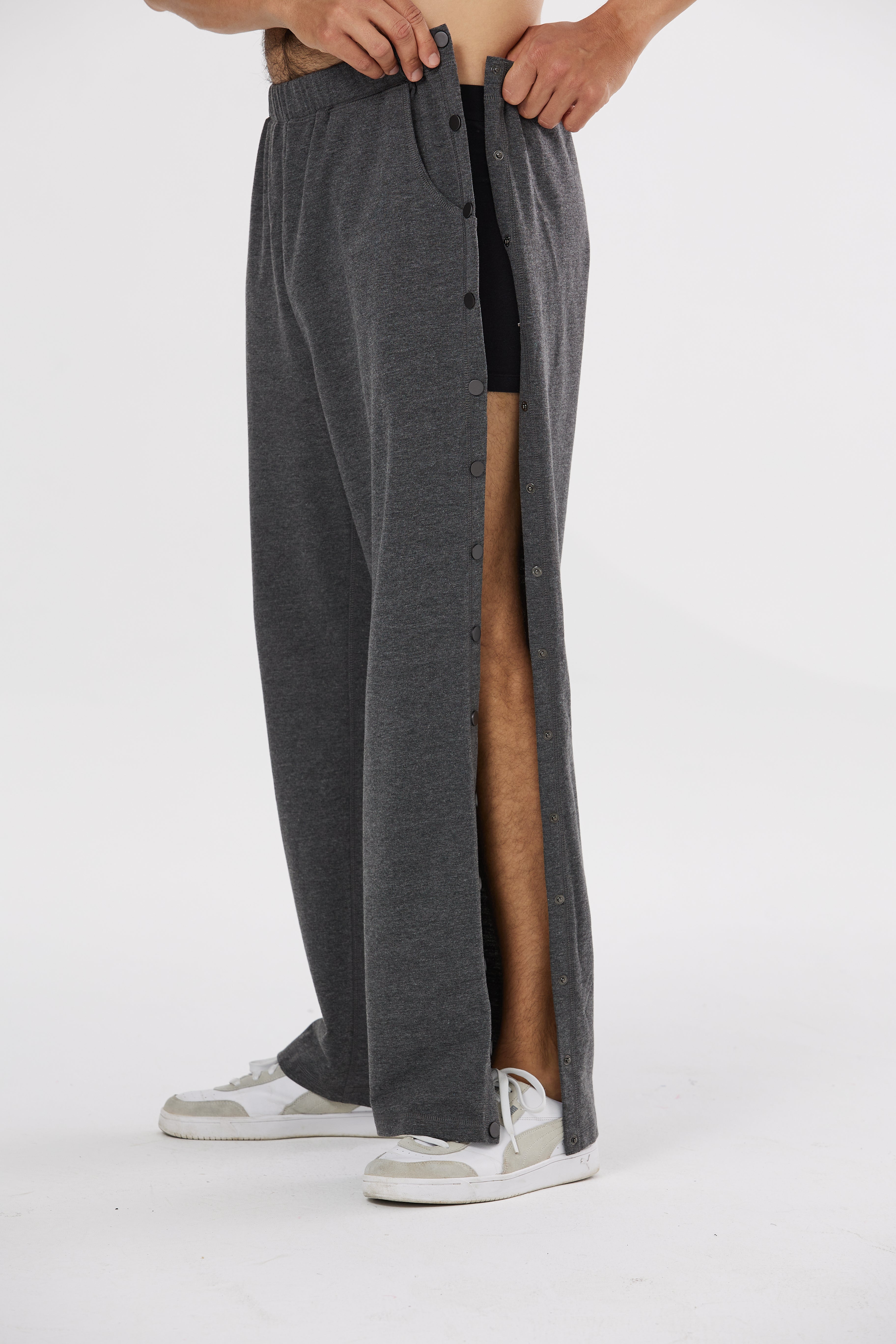
Before you choose, check whether you can close the pants, with help if needed, and still sit comfortably.
Size, length and everyday wear
A size label does not tell you how the fabric behaves around your knee, and there is no rule that says to buy a size up. Check the real fit instead: room when seated, no pulling, and a fastening you can manage. Cold or warm weather, how the pants look for going out, and whether you would actually wear them are all part of the decision. You do not need a different pair for every situation.
Common questions
What about women's fits?
The same checks apply. Look for a waistband, hip fit and length you will actually wear — and remember a waist that fits does not mean the knee has enough room. Slim or tapered legs still need checking for knee space and exposure.
Do I need special pants for physiotherapy or rehab?
Not necessarily. Loose trousers or suitable shorts may be enough if they leave room when you sit and let you uncover the knee when needed. Check that you can put the clothing back and close the fastenings afterward, with help if needed. If your clinic or team has its own clothing rules, follow them.
When can I wear jeans again?
There is no set week that works for everyone. Instead, check the fabric itself: can it pass over the areas it needs to, does it pull tight when you sit, is the contact comfortable, and can you expose the knee when needed? Those checks matter more than a calendar date.
Your next step
If you can put on your existing pants, uncover the knee when needed and put the clothing back in place and close any fastenings afterward, with help if needed, keep wearing them. If you want to compare recovery pants, browse the knee surgery pants collection, then check the opening details and garment measurements on the individual product pages.
Sources
Medical note: This article provides general clothing and dressing information only. It is not medical advice and does not replace guidance from your surgeon or care team.