Dialysis & PICC Line Clothing for Arm Access, Warmth, and Treatment-Day Coverage

For dialysis or PICC line appointments, clothing has to keep an access area reachable while the rest of the body stays covered. Start with where the access point is, then choose a layer that opens around that area instead of exposing more than needed.

Community-informed treatment access choices

Start with the arm-access window

People in dialysis and PICC communities often talk about the same practical tension: treatment rooms can feel cold, but sleeves and layers get in the way. The useful outfit is usually not just warm; it is warm with the right access point.

Start here

What should I wear to dialysis or with a PICC line?

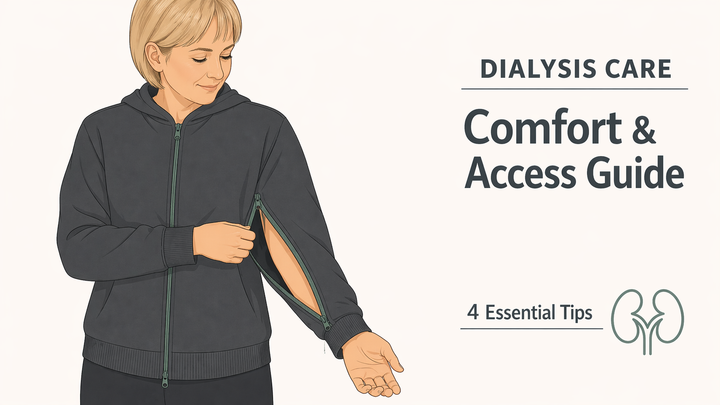
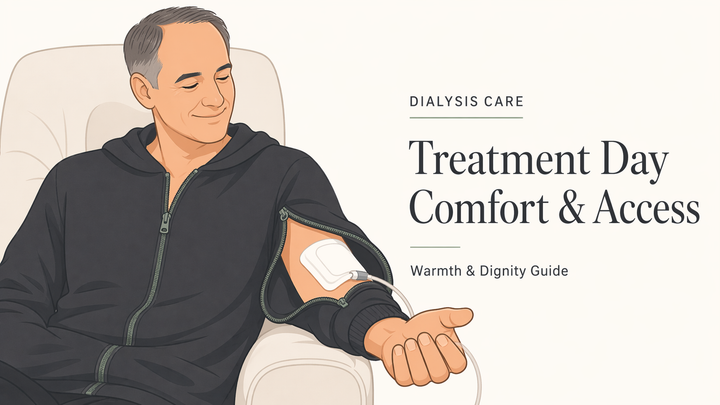
Choose clothing that keeps the access area reachable and the rest of you covered. For arm access, a treatment access hoodie with an inner-arm zipper from wrist to underarm can support appointment routines depending on your access location and care setup.

Common struggle

Why are regular hoodies hard for dialysis or PICC access?

A regular sleeve may need to be rolled, pulled, or removed, which can expose more skin and make warmth harder to maintain. Bulky layers can also get in the way when the access point needs to remain visible.

Dressing path

How can I stay warm while keeping access reachable?

Choose the access side first. Use a sleeve zipper or access layer that opens around the needed area, then keep the rest of the hoodie or shirt closed for coverage. Confirm with your care team whether your access point needs to remain visible.

Real-life concern

Real-life concern: "The chair is cold, but my sleeve is the problem."

Community workarounds often include flannels, zip hoodies, blankets, and specially made arm-access layers. The pattern is consistent: people want warmth without fighting the sleeve every session.

Choose by the access problem

I need arm access during treatment

Choose a layer with sleeve access rather than relying only on rolling up a regular sleeve. The goal is to open near the treatment area while keeping the rest of the body covered.

Shop arm access layers

I get cold during dialysis

A treatment access hoodie can add coverage while still allowing access planning. Pair it with clinic-approved blankets or layers if your care team allows.

View dialysis clothing

I have a PICC line and need sleeve access

Sleeve openings may help when the access area is on the arm, depending on placement and dressing requirements. Check the exact access location before choosing the garment.

See PICC-friendly layers

I need chest and arm access on different days

Keep the access type clear. Chest port access and arm access are different clothing problems, so choose the opening that matches the appointment.

Compare treatment access

Dialysis fistula, graft, catheter, and PICC locations can vary. Always follow clinic instructions about what must remain visible and accessible.

Frequently Asked Questions

What should I wear to dialysis if I get cold but nurses need arm access?

Choose clothing that keeps you warm while leaving the treatment arm accessible. The main issue is balancing warmth with access to an AV fistula, graft, or PICC line, so sleeve access can matter more than general looseness.

Can I wear a regular hoodie to dialysis?

A regular hoodie may work if the sleeve moves easily and does not block arm access. If the sleeve has to be pulled up, removed, or bunched tightly near the access site, a sleeve-opening hoodie may be easier.

What shirt or sleeve works with a PICC line in the arm?

For a PICC line in the arm, choose clothing that allows sleeve access without pulling tightly over the line. Front-opening tops, loose sleeves, or sleeve-opening layers can reduce tugging and unnecessary garment removal.

What clothing works with an AV fistula or graft during dialysis?

Choose clothing that keeps the arm area accessible without tight pressure over the access site. Short sleeves, loose sleeves, or sleeve-opening layers can work depending on the access location and clinic setup.